Artisan Croissant Recipe: Master This French Pastry

Dreaming of light, airy layers and rich, buttery flavor? Mastering the artisan croissant at home is a rewarding journey into classic French baking. This guide demystifies the process, helping you create that irresistible, flaky texture characteristic of a true french pastry. We’ll walk you through each step of this classic French bakery recipe, ensuring you can replicate that professional touch in your own kitchen.
Creating artisan croissants requires patience and precision, but the result is a supremely satisfying treat. Our recipe focuses on the essential techniques for developing those signature buttery layers, transforming simple ingredients into an elegant culinary masterpiece.
Artisan Croissant: Recipe Snapshot
- Yield: 12-16 croissants
- Prep Time: 4 hours (active: 45 minutes; inactive: 3 hours 15 minutes)
- Cook Time: 15-20 minutes
- Total Time: Approximately 4 hours 30 minutes (plus overnight chilling)
- Key Notes: This recipe involves extensive chilling and multiple folding steps (lamination) to achieve the characteristic flaky texture. High-quality butter is crucial.
Ingredients for Your Buttery French Pastry
For the Dough:
- 500g (about 4 cups) all-purpose flour
- 60g (1/4 cup) granulated sugar
- 10g (1.5 teaspoons) salt
- 10g (2.5 teaspoons) active dry yeast
- 120ml (1/2 cup) warm milk (around 105-115°F / 40-46°C)
- 120ml (1/2 cup) cold water
- 30g (2 tablespoons) unsalted butter, softened
For the Butter Block (Lamination):
- 250g (1 cup + 2 tablespoons) unsalted butter, very cold
For the Egg Wash:
- 1 large egg
- 1 tablespoon milk
Step-by-Step Instructions for Artisan Croissants
- Prepare the Dough: In a large bowl, whisk together the flour, sugar, and salt. In a separate bowl, dissolve the yeast in the warm milk, then add the cold water. Pour the liquid mixture into the dry ingredients and mix until a shaggy dough forms. Add the softened butter and knead by hand for 5-7 minutes, or with a stand mixer for 3-4 minutes on medium speed, until the dough is smooth and elastic.
- Initial Chill: Form the dough into a ball, place it in a lightly oiled bowl, cover with plastic wrap, and refrigerate for at least 1-2 hours, or preferably overnight. This helps develop flavor and makes the dough easier to work with.
- Prepare the Butter Block: Place the very cold butter between two sheets of parchment paper. Using a rolling pin, pound and roll the butter into a 6×6 inch (15×15 cm) square. Ensure the butter is pliable but still cold. Refrigerate until ready to use. For more insights into working with butter in baking, explore resources on classic baking techniques.
- First Fold (Single Fold): On a lightly floured surface, roll the chilled dough into a 12×12 inch (30×30 cm) square. Place the butter block diagonally in the center of the dough square. Fold the four corners of the dough over the butter block, sealing it completely like an envelope. Gently roll the dough into a 20×8 inch (50×20 cm) rectangle. Fold one-third of the dough over the center, then fold the remaining third over that, creating three layers (like a business letter). This is the first “single fold.”
- First Chill: Wrap the folded dough tightly in plastic wrap and refrigerate for 30 minutes.
- Second Fold (Single Fold): Repeat the rolling and folding process: roll the dough into a 20×8 inch (50×20 cm) rectangle, then perform another single fold. Refrigerate for another 30 minutes.
- Third Fold (Single Fold): Repeat the rolling and folding process a third time. After this third fold, refrigerate the dough for at least 1 hour, or up to overnight. This extensive lamination is key to the flaky structure of this classic baking project.
- Shape the Croissants: On a lightly floured surface, roll the chilled dough into a large rectangle, about 24×10 inches (60×25 cm) and 1/8 inch (3 mm) thick. Trim the edges to create clean lines. Cut the dough into triangles with a 4-inch (10 cm) base.
- Roll the Croissants: Gently stretch the base of each triangle. Starting from the base, roll each triangle tightly towards the point, forming the classic croissant shape. Curve the ends slightly to create the crescent.
- Final Proof: Place the shaped croissants on a baking sheet lined with parchment paper, leaving ample space between them. Cover loosely with plastic wrap and let them proof in a warm, draft-free place for 2-3 hours, or until they are visibly puffy and jiggly (the butter should not be melting out). They should almost double in size.
- Preheat Oven & Egg Wash: Preheat your oven to 400°F (200°C). Whisk the egg and milk for the egg wash. Gently brush the tops of the proofed croissants with the egg wash.
- Bake: Bake for 15-20 minutes, rotating the baking sheet halfway through, until the croissants are deep golden brown and beautifully puffed.
- Cool: Transfer the baked croissants to a wire rack to cool slightly before serving.
💡 Key Takeaways for Flaky Success
Temperature control is paramount. Keep your butter and dough cold during lamination to prevent the butter from melting into the dough, which would inhibit flakiness. Work quickly, and don’t hesitate to pop the dough back into the fridge if it feels too warm or soft.
Tips, Substitutions, and Variations
Tips for Perfection:
- Quality Butter: Use high-quality unsalted butter with a higher fat content (often labeled “European-style”). This contributes significantly to the flavor and flakiness.
- Don’t Overflour: Use just enough flour to prevent sticking during rolling; excess flour can toughen the dough.
- Gentle Handling: Handle the dough gently, especially during lamination and shaping, to avoid tearing the delicate layers.
Variations:
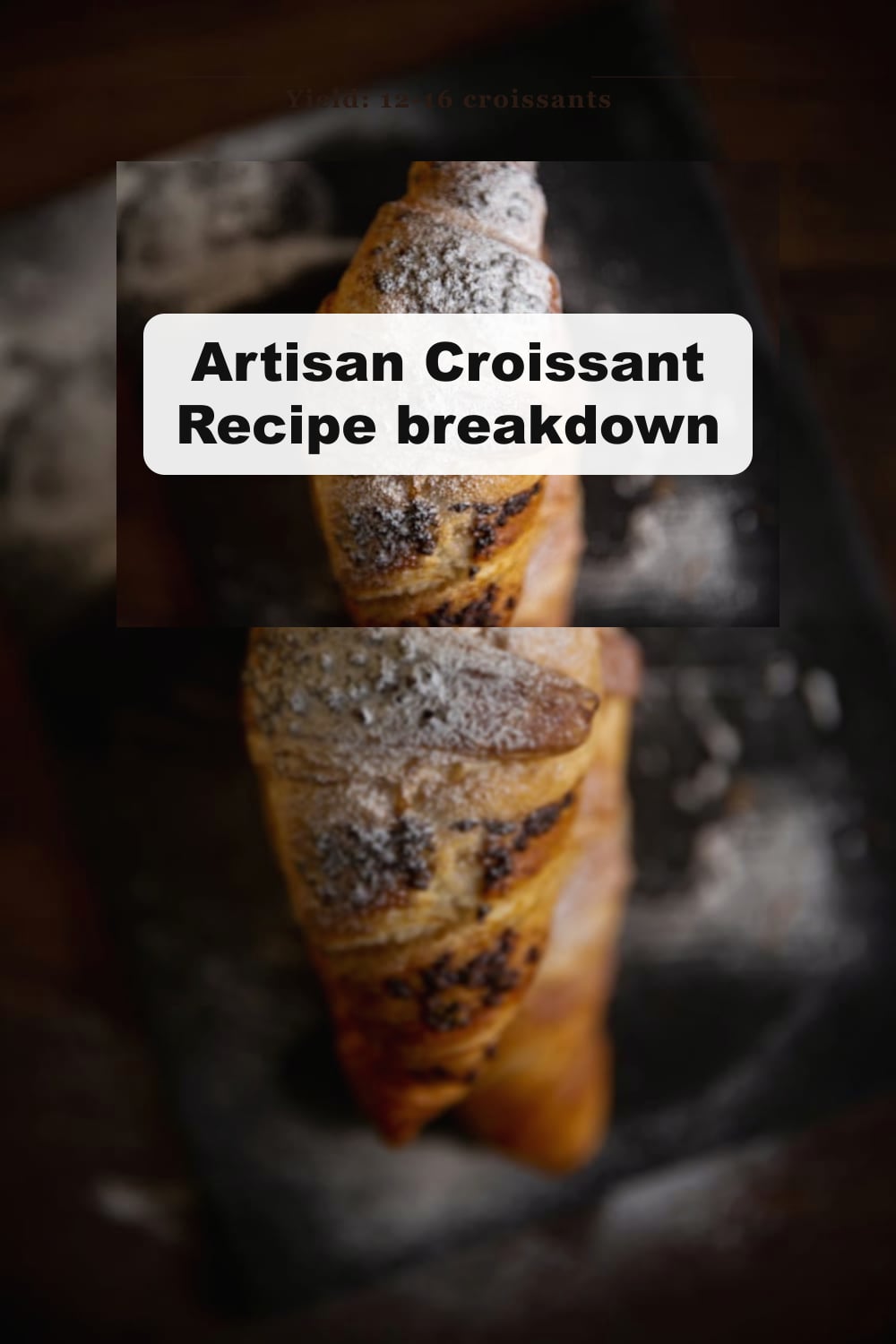
- Pain au Chocolat: Before rolling, place two chocolate batons (or squares of dark chocolate) at the base of each dough triangle.
- Almond Croissants: Split baked croissants, fill with frangipane (almond cream), top with more frangipane and sliced almonds, then bake again until golden.
🛠️ Practical Tip: The Power of Cold
Always ensure your butter block is cold but pliable, and your dough is well-chilled before and between each fold. If the dough resists rolling or butter starts to seep, return it to the refrigerator for 10-15 minutes.
Storage and Make-Ahead Guidance
- Baked Croissants: Store freshly baked croissants at room temperature in an airtight container for up to 1 day. For longer storage, freeze them in an airtight bag for up to 2 months. Reheat in a warm oven for a few minutes.
- Unbaked Croissants (Make-Ahead): After shaping and before the final proof, you can freeze the raw croissants. Place them on a baking sheet in the freezer until solid, then transfer to an airtight freezer bag for up to 2-3 weeks. When ready to bake, place them on a parchment-lined baking sheet, cover, and let them thaw and proof at room temperature for 6-8 hours (or overnight) before egg washing and baking.
Serving Suggestions and FAQ
These artisan croissants are divine simply on their own, perhaps with a cup of coffee or tea. They also pair wonderfully with jams, preserves, or a drizzle of honey. For an extra treat, slice them open and fill with a smear of your favorite homemade chocolate spread.
Frequently Asked Questions
- Why isn’t my croissant flaky?
- Lack of flakiness often stems from the butter melting into the dough during lamination, insufficient chilling between folds, or overworking the dough. Ensure all ingredients are cold and work quickly.
- Can I make the dough ahead of time?
- Yes, the dough can be made through the third fold and refrigerated overnight. You can also freeze shaped, unbaked croissants as described in the storage section.
- What kind of butter should I use?
- Opt for high-quality unsalted butter with a minimum of 82% butterfat content. This makes a significant difference in both the lamination process and the final flavor.
Ready to Bake Your Own Buttery Masterpieces?
Embark on this rewarding baking adventure and bring the taste of a classic French bakery to your home. Share your artisan croissant journey with us!