The Ultimate Guide to a Traditional French Breakfast

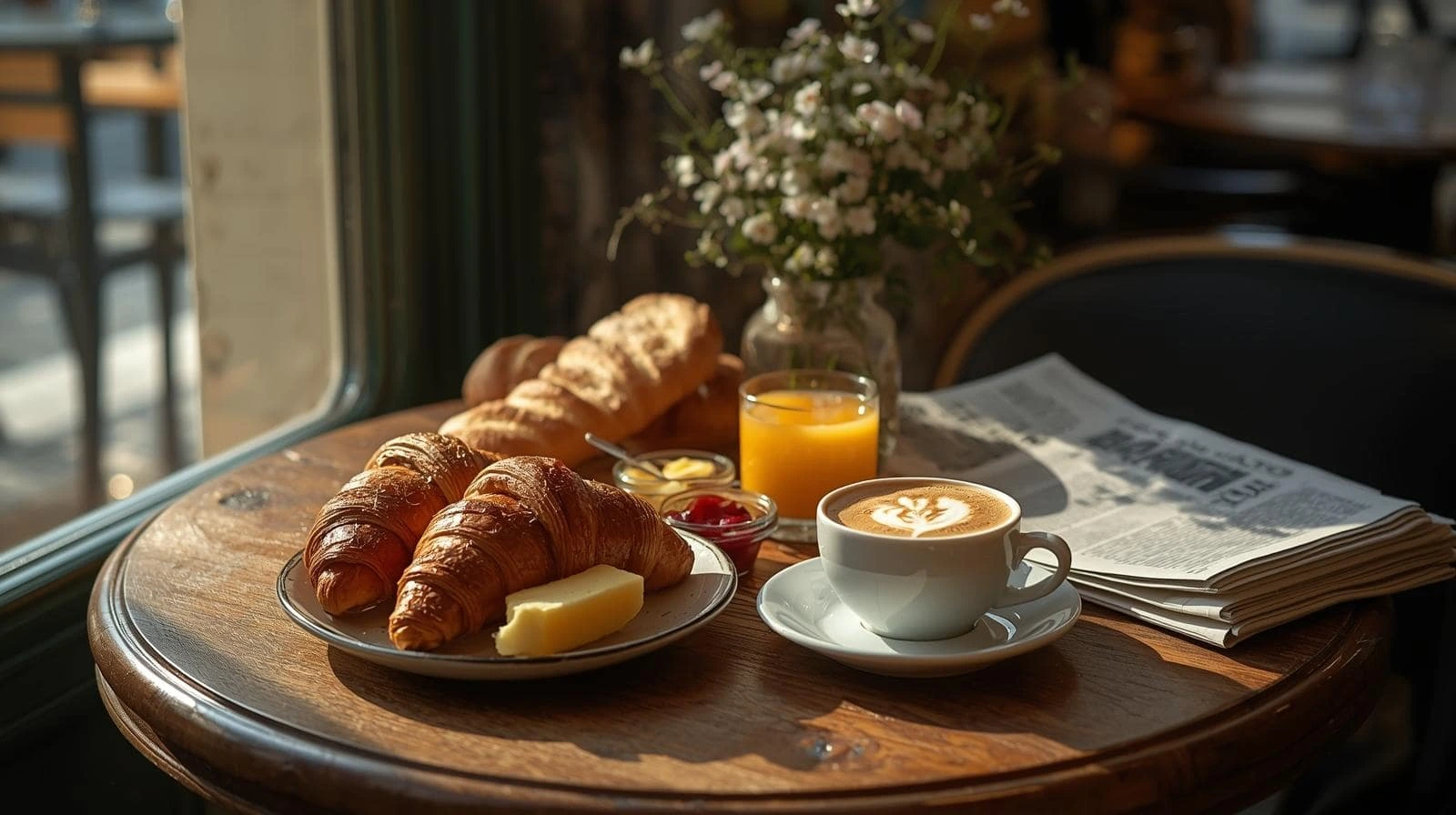
Ah, the French breakfast. It’s an experience that evokes images of sun-drenched Parisian cafes, the rustle of a morning newspaper, and the simple, profound joy of perfectly baked bread. Unlike the hearty, heavy breakfasts found in many other parts of the world, le petit-déjeuner is an affair of elegant simplicity. It’s less about filling up and more about savoring the start of the day with quality ingredients. This guide will walk you through everything you need to know about the traditional French breakfast, and how you can recreate this beautiful morning ritual right in your own home.
So, grab your cup of coffee, and let’s dive into the delicious world of the morning meal, the French way.
The Philosophy: Light, Fresh, and Simple
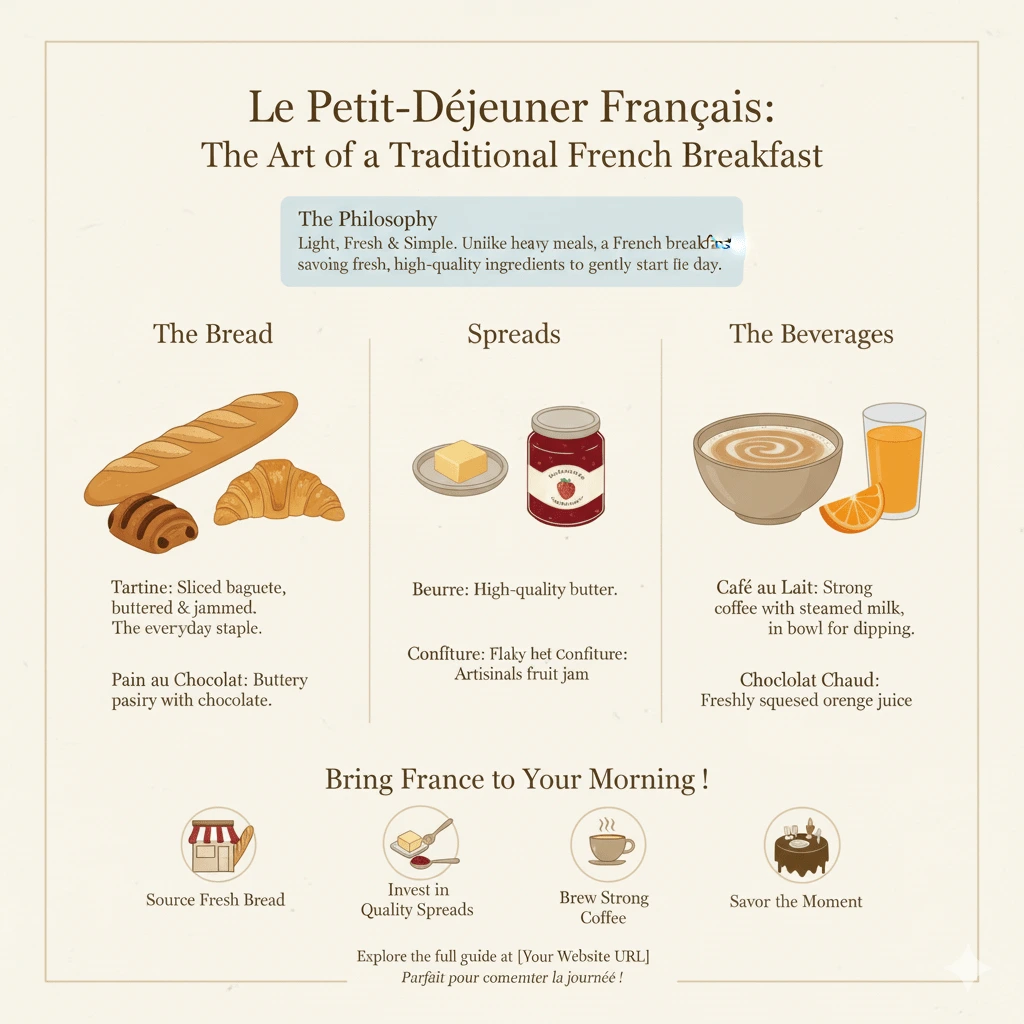
The first thing to understand about a French breakfast is that it is typically light. The French view breakfast as a simple pleasure to awaken the senses, not a heavy meal to weigh you down. Lunch (le déjeuner) is often the main meal of the day, so breakfast is kept purposefully brief but delicious. The focus is on exceptional quality: freshly baked pastries from the local boulangerie, artisanal jam, and good coffee. This delightful meal is the cornerstone of a classic French breakfast.
What’s on the Table? The Key Components
While there can be regional variations, a classic French breakfast is built around a few core elements that you’ll find on nearly every table, from a bustling city bistro to a quiet countryside home.
1. The Bread and Pastries (Viennoiseries)
This is the heart of the meal. The French don’t do sliced, processed bread in the morning. Instead, they opt for:
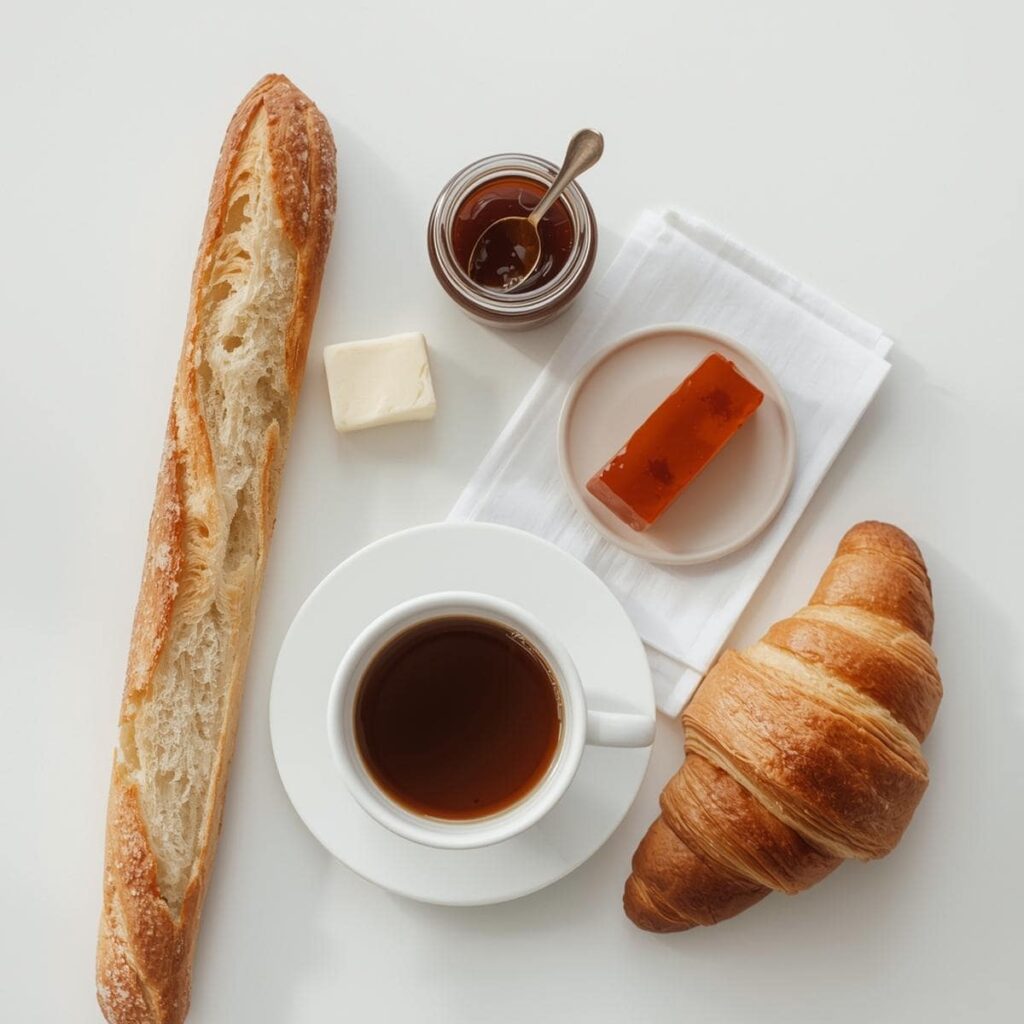
- The Tartine: This is the true star of the everyday French breakfast. A tartine is simply a slice of a fresh baguette, toasted or untoasted, slathered with good quality butter (beurre) and jam (confiture). It’s crunchy, sweet, salty, and utterly perfect.
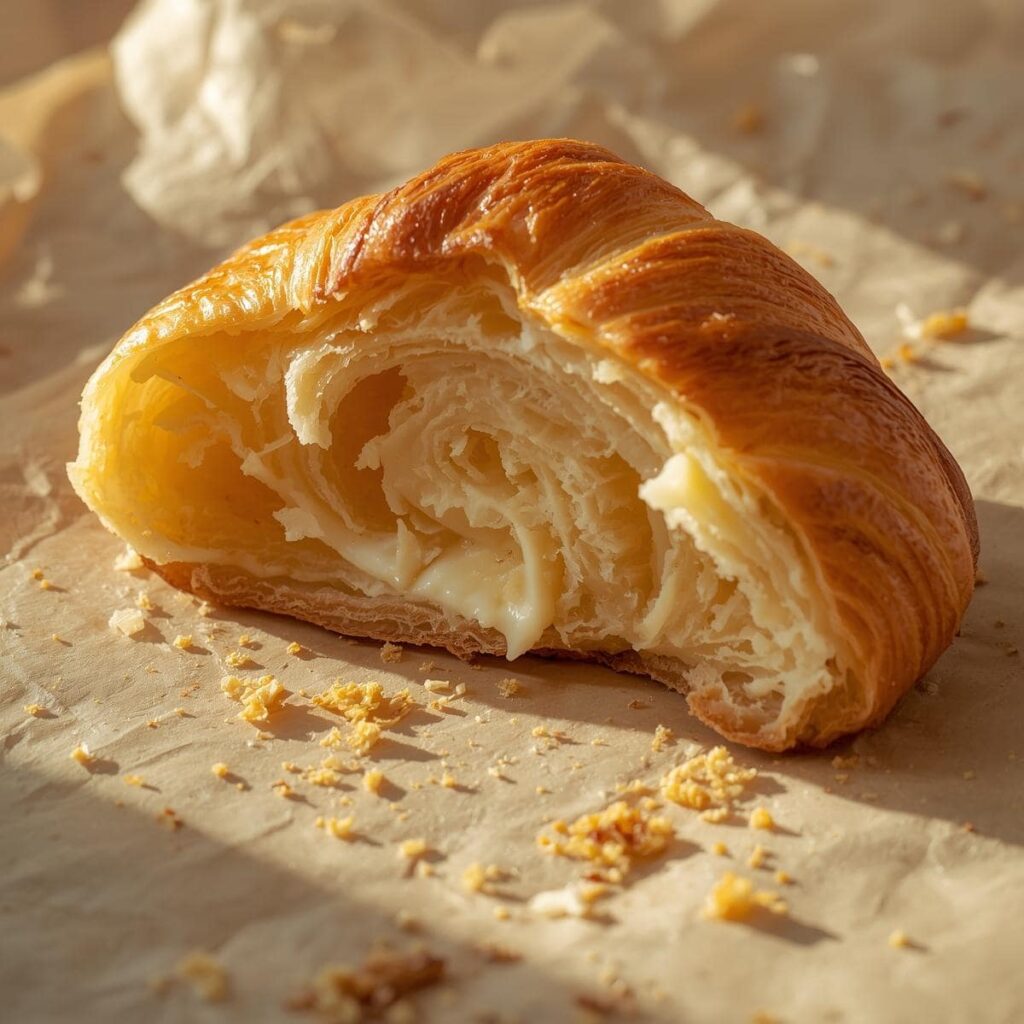
- The Croissant: The iconic, buttery, flaky crescent of goodness. A perfect croissant is light as air and shatters into a thousand delightful pieces when you bite into it. It’s often reserved for weekends or special occasions.
- Pain au Chocolat: A buttery, layered pastry with one or two sticks of dark chocolate baked into its center. It’s a slightly more indulgent but common feature of a weekend French breakfast.
2. The Spreads: Butter and Jam
The French take their butter and jam very seriously. You won’t find margarine here. High-quality, often salted, butter is the standard. The jam is typically artisanal, with popular flavors being strawberry (fraise), apricot (abricot), or raspberry (framboise).
3. The Beverages: Coffee and Juice
No French breakfast is complete without a hot beverage to accompany the pastries.
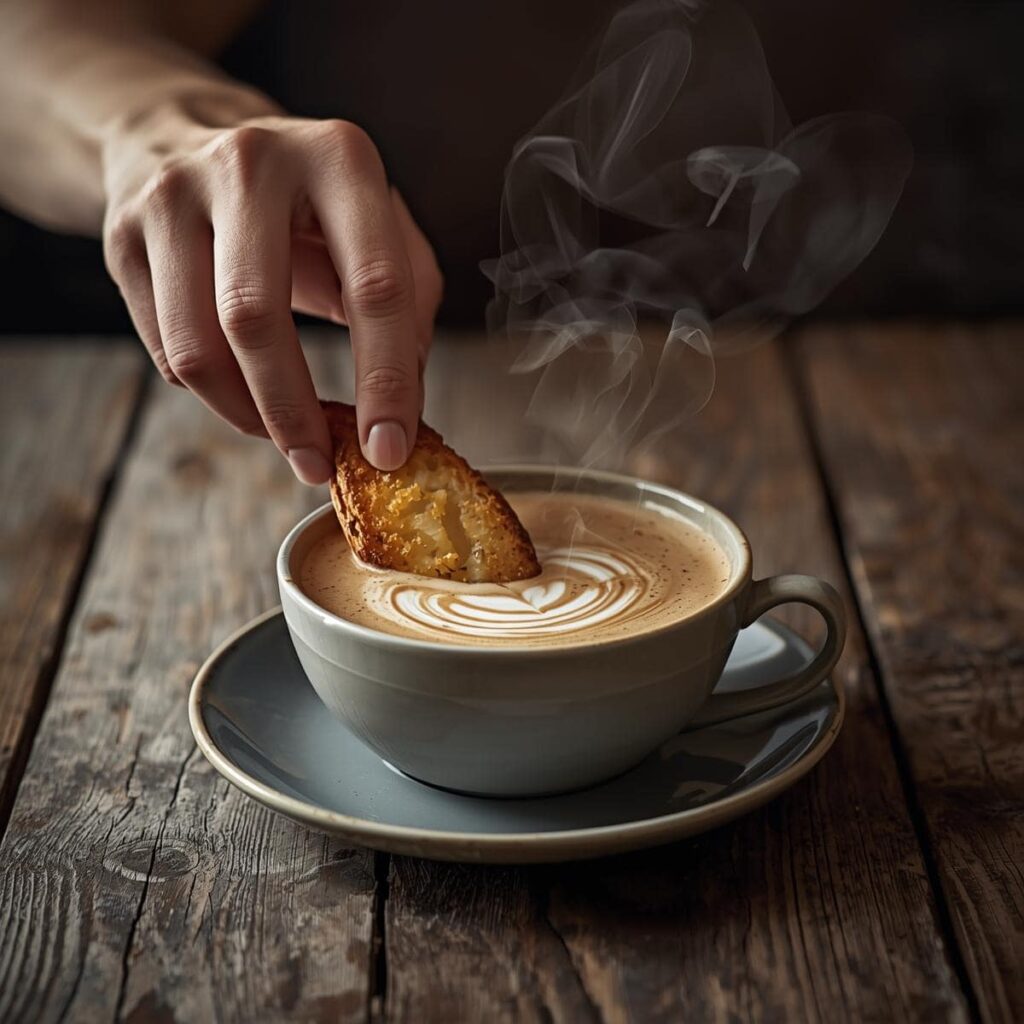
- Café au Lait: The most traditional choice. It’s strong brewed coffee mixed with an equal amount of steamed milk, typically served in a wide bowl or cup so you can easily dip your tartine or croissant into it.
- Hot Chocolate (Chocolat Chaud): Especially popular with children, this is a rich, dark hot chocolate that is far from the instant powder mixes you might be used to.
- Fresh Juice (Jus d’orange): Freshly squeezed orange juice is a common and refreshing addition to the meal.
How to Create Your Own French Breakfast at Home?
The beauty of the French breakfast is its simplicity, which means it’s incredibly easy to replicate.
- Get the Best Bread: Find a good local bakery and buy a fresh baguette.
- Invest in Quality: Splurge on high-quality European-style butter and a delicious, fruit-forward jam.
- Brew Strong Coffee: Make a strong pot of coffee and heat some milk to create your own café au lait.
- Set the Scene: Take a few extra minutes to sit down at the table. Use a proper plate and cloth napkin. The experience is as much a part of the French breakfast as the food itself.
What is your favorite part of a traditional French breakfast? Let us know in the comments below! Additionally you can check our hazelnut spreads guide and Homemade nutella recipe here. You can also explore Viral Lindt Dubai Chocolate here.