U.S. Food Ingredients Restricted in Europe

Why Are Some U.S. Food Ingredients Restricted Across Europe?
Have you ever wondered why certain beloved American snacks or pantry staples taste different, or are simply unavailable, when you travel to Europe? It might surprise you to learn that some food ingredients commonly found in the United States face significant restrictions in the European Union and other regions.
This intriguing difference stems from varying approaches to food safety and additive approval between global regulatory bodies. Understanding these distinctions can help us appreciate the complexities of our global food supply.
Key Facts
- Food ingredient regulations vary significantly between countries worldwide.
- Ingredients approved for consumption in the U.S. may be prohibited or restricted in the European Union.
- These regulatory disparities often arise from differing scientific assessments and precautionary principles concerning food additives.
The Global Plate: Navigating Ingredient Differences
The journey of food from farm to plate is governed by intricate rules, and these rules are not universal. While the U.S. Food and Drug Administration (FDA) oversees food safety in America, the European Food Safety Authority (EFSA) sets the standards for the European Union. These two powerful entities operate under fundamentally different philosophies when it comes to approving ingredients.
Where one body might consider an additive safe until proven otherwise, the other often requires extensive proof of safety before permitting its use. This proactive, “precautionary principle” is a hallmark of European food law, leading to restrictions on various substances, including certain food colorings, preservatives, and processing aids.
Why the Discrepancy? Understanding Regulatory Approaches
The core reason for these ingredient disparities lies in how regulatory bodies weigh potential risks and benefits. In the European Union, the burden of proof is typically on the manufacturer to demonstrate that an additive is entirely safe before it can be introduced to the market. If there’s scientific uncertainty about long-term effects, the ingredient may be restricted or even prohibited.
Conversely, the United States has historically adopted an approach that allows substances to be used until significant evidence emerges demonstrating harm. This means that certain artificial colorings, brominated vegetable oils, and specific preservatives might be commonplace in U.S. products but entirely absent from their European counterparts. It’s a fascinating reflection of cultural and scientific priorities.
Impact on Your Pantry and Plate
These differing regulations mean that if you’re a food enthusiast or simply someone who enjoys a variety of snacks, you’ll encounter noticeable differences. Popular American items, particularly processed foods, can look and taste different when sold in Europe due to ingredient substitutions made to comply with local laws. This can even extend to staple items like bread or dairy products, where processing methods or specific enhancers might be regulated differently.
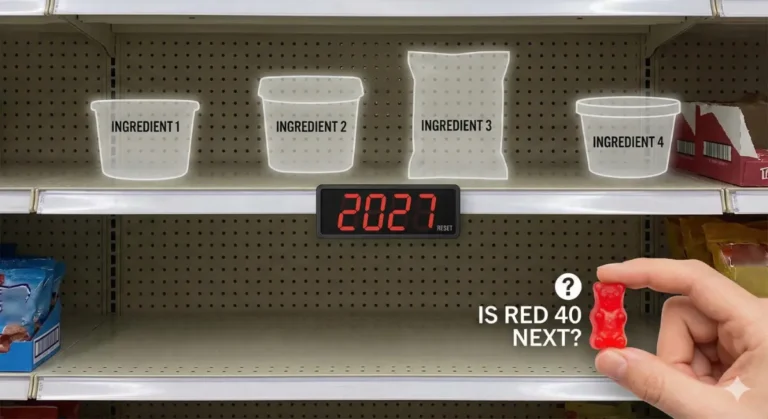
For more insights into which specific items face these restrictions, you might find articles on American snacks banned in Europe quite informative. Additionally, updates on ingredient discussions, such as the banned snacks list and Red 40 update, highlight ongoing conversations about food additives and consumer safety.
Explore More Recipes
Discover viral desserts, homemade chocolate, and gourmet spreads